Monday, March 23, 2009

You're Next... An American Threat

Upon reading this propaganda, I was immediately appalled. It is a shocking image full with threats. It is physically threatening, showing a muscular Uncle Sam pulling up his sleeves, ready to finish anyone or anything off who is in his way. And it is socially and mentally threatening by using the racial slur of "Jap" and warning that the "Japs are next". It is hard to comprehend how anyone could create a poster like this, but by looking back at history it can be easier to understand or explain (but not necessarily excuse) it. 
On December 7th, 1941, America was at a standstill. The entire country was shocked. The Japanese had launched an unprovoked bomb raid of Pearl Harbor, using about 440 warplanes, killing about 2,400 and injuring 1,200. It is not surprising that this ignited a fire of anger, resentment and racism within American hearts towards the Japanese. Due to that anger and fear, Japanese internment camps were set up in 1942; imprisoning about 110,000 Japanese Americans, as well dropping two atomic bombs on Japan. It is easy to pass judgement on whoever made this poster as a horrible, racist person. And not that anyone would make a poster like this today, but weren't similar feelings stirred when two planes, piloted by Islamist terrorists, crashed into the World Trade Center on 9/11? These attacks killed almost 3,000 innocent lives. I would not believe anyone who says that there is no racism towards Muslims or people of Middle Eastern descent in the U.S. You just have to look at an airport security line; who is more likely of being pulled off to the side for an extra search?

I sometimes have trouble using historical or temporal relativism as an explanation for this type of propaganda. And from a moral standpoint, the poster is plain horrible. But it is not so far fetched to understand how this poster was created at such a time and how it helped urge Americans to dedicate their time to WWII and boost morale. Obviously the image shows that Americans thought the Japanese as pure enemies, like in a video game, and not as another country with the similar goals, filled with real human beings. I am not saying that a poster exactly like this would be made today, advocating the war in Iraq, rather that the poster is very significant to current times. My first impression of this piece of propaganda was that it was offensive in so many different ways. And when trying to apply this poster to modern times, it gets me thinking; is this what Americans are thinking (maybe not so outright violently) silently about our war on terrorism? Do Americans think of Islamist terrorists just as people we have shoot down as in our video games and not as sons or brothers? I think some do. Perhaps Iraq is next for the Americans who want "finish the job". 

Bomb Disposal Units

One out of every ten bombs that the Germans dropped during the Luftwaffe over Britain did not go off. And this 10% proposed as much as a danger to the British population as the 90% that exploded did. The responsibility fell on the Air Raid Precautions, which was formed by the British Prime Minister, Stanley Baldwin, in 1935 and the Bomb Disposal Units. The Air Raid Wardens had to locate the unexploded bombs, evacuate the area and inform the Bomb Disposal Unit of the bomb. The BDU would then send someone to the area to defuse the bomb. German manufacturers changed the bombs in 1940 though, by added anti-handling devices meaning that the bomb would explode if the fuse was removed. This changed the way the BDU handled the bombs and they then had to cut into the bomb and take out the explosive contents, making it much harder for them to handle the bombs. 

Home Guard

When the second world war began their were many middle aged men that offered their services to the army. Winston Churchill proposed an idea to the head of the air raid precautions to create a Home Guard. After the German army began there western offense, Britain announced over the radio that they were looking for men who were between the ages of 40 and 65 to become local defense volunteers (LDV's). These men were not paid, and the only requirement that these men needed to have was to be able to shoot a rifle or a shotgun. After the defeat in France the LDV's were deployed to Britain's' coast. In Britain they defended the munition factories, organized road blocks, checked identity cards, and capture German's who's planes were shot down. However, a major problem for the LDV's was the lack of shot guns and pistols. Britain asked the public to help supply the men, but their contributions weren't enough. The war veterans became involved in helping the LDV prepare to fight the Germans. They created training schools, one of the most important schools was named Osterley. The Home Guard was trained in sabotage as well as the use of high explosives.

Gas Masks

After Hitler came to power, the British government didn't know what would follow to. In fear of chemical warfare used by the Luftwaffe-the German air force- the government provided gas masks for British civilians in 1939. For nearly a year, these gas masks were used by 75% of "Londoners."
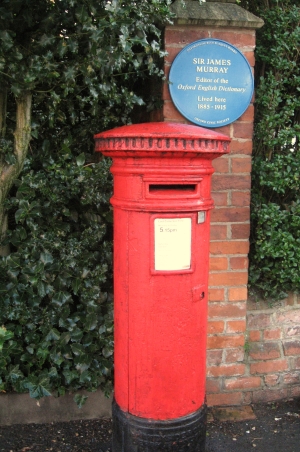
Although the government might have frightened its civilians with talk of chemical warfare, this, I believe, is what made people obey the government's new rule- that all citizens must wear the gas masks when they were outside. In frightening civilians about poison gas and distributing the masks unfairly, this created commotion because the people that did not receive the masks worried they would be in danger of being killed by poison in the air. Because the government did this, I believe it really cared about keeping its civilians and maintaining population. The fact that the government punished those that misplaced or broke their masks by making them pay for the masks only supports that argument as well as the fact that Air Raid Wardens (group created by government) conducted monthly inspections of gas masks. Post Office pillar boxes were given a new coating of paint that would detect  gas. This made it easier for Gas Identification Squads, which were a group of chemists, to see if the gas in the air was poisonous. The fact that the British Government enforced that people wear this mask, show that they wanted to protect their people. I don't think that the British government should have inflicted greater punishment on the people not carrying their gas masks because if the people wanted to save their lives, they would have listened to the government because all it was trying to do was protect its people from somewhat avoidable death. 

Barrage Balloons

Barrage Balloons were a way to protect people on the Home Front by preventing low-level attacks and dive bombing. Basically, they were huge balloons tethered to a wagon by cables. These cables were strong enough to destroy any aircraft that collides with it. Indeed, the balloons sometimes accomplished their goal, but there were also negative ramifications as well. For example, the balloons darkened the city by blocking out light from the stars or moon. Also, the balloons could be easily destroyed by machine guns shooting them down. This posed a danger to the home front because the barrage balloons would often come down in flames. During storms, the balloons had to be taken down because they would behave unpredictably in bad weather. Bringing down the balloons and "storm bedding" it was hard work, but had to be done because otherwise, the balloon would break away and drag the cables with it. 

Atomic Bomb

NBC aired this piece in 1995 not only to honor the anniversary of the dropping of the Atomic bomb and subsequent Japanese surrender, but to also remind us of the great travesties that come with such destruction.  This video was a success becomes it had a somber overtone.  Also, the way it featured interviews from both American and Japanese perspectives contributed to its success.  This video reminds us that we won the war, but at a price which only time can measure.  The dropping of the Atomic bomb contributed to hundreds of thousands of deaths, but also introduced the world to such destruction.  It created a weapon of death, something that corrupt leaders and nations now strive for in order to gain world power.  It certainly changed how wars are fought, as now WMD's are a constant worry when going into war.  At the same time, the atomic bomb was the means in which we won WWII.  Had we not used this weapon, who knows how many more people would've died.  Overall, I believe this video was successful in being a somber tribute to the anniversary of the A Bomb.  Its effect on the future, however, is all relative to the viewer and their opinion

Textbook

There are parts of our textbook that I like and dislike.  First of all, I like how the textbook organizes the pre-war activity by nation.  I also like how they show each countries "path to war."  The textbook struggles in that it doesn't devote enough energy to the holocaust, as only 1 or 2 pages in focused on this travesty.  If i could change the textbook, i would make it so there are 4 chapters; Pre-war (similar to the type in our current book), Wartime (with many primary and secondary sources), Holocaust (its affect on the war, the world, and the jewish people), and Post War(the affect this war had, how it revolutionized society).  It also might be interesting if we read a second textbook from a different perspective on the war, because the US and other countries obviously see the war as much different things.  I don't believe a textbook has to be in chronological order, except for the Wartime section.  We can learn in many different ways, and the learning could possibly be more effective if we focused on a particular theme or motive, rather than dates and names