Monday, March 23, 2009
Desertion in the Armed Forces
The National Service (Armed Forces) Act was passed as soon as the UK declared war on germany. It essentially said that all people from the ages of 18 to 41 were game to be signed up to fight in the war against their will. The term that they used was conscription, which was first introduced in 1939, made it a requirement for all me 20 or 21 to take 6 months of military training. The Nation service act simply just extended the ages to 18 to 41, and said anyone within that age group could have to go to war. This new act caused a lot of people to try and find a way to get out of their "duty". The most popular way to get out was by simply not signing up for the armed forces. They would simply tell you to sign up, but you could easily and quite effectively just disregard this. They would also do such things as pay to have someone who previously failed the medical test to take your part, and fail the medical test under your name. Others would even buy counterfeit medical release forms. Friends and family of physicians could get them for free. However many of the doctors who forged on a large scale were caught and arrested. Desertion in the Armed forces was a huge problem in world war 2 because virtually nobody wanted to fight, so they tried any way possible to get out of it. The reason those who had deserted the armed forces had to resort to crime was because they didnt have an identity card, and more often than not would have to resort to looting. Most men would desert right before being shipped off. Records even show that there was a huge number of men missing who were supposed to take part in D-Day.

Rationing
Rationing in Britain was introduced in 1940 to respond to the decrease of food imports. Food coupons were used to control food consumption. There were several disputes regarding 'cheating' to get food, even though some products like eggs, butter, and meat could be easily found in rural areas. Children's needs were taken into account, however. Luckily they were able to legally receive rare goods like orange juice and milk to help their growth. The government also allowed pregnant women to receive free milk as well, given that their family earned the minimum wage or less. Soon enough, there was a report starting to be written that gave nutritional advice. Winston Churchhill did not approve of the article, however, so it was never published. Eventually the government also began to ration clothing as well, which quickly became scarce. Towards the end of the rationing phase, the annual coupon allowance was 20, but a coat cost 18 coupons.
While rationing may seem to be a good idea from an economic point of view, it is impossible to govern the amount of food and nutrition we need as individual. People will try to get what they need, whether it is legal or not. Instead of rationing food, they should encourage cultivating food so they are not as reliant on imports. That way they will become self sustaining and the people are not as likely to become frustrated and hungry.
Air Raid Sirens
The sounding of air raid sirens was arranged by the Air Raid Wardens when the Luftwaffe (German air force) approached the British coast. The first siren was sounded before an air raid happened. People were expected to expect to take cover in air raid shelters immediately, before the actual raid started. People working on things important for the war effort were told to ignore the first siren telling them that aircraft were approaching. They were only allowed to take cover once the second siren sounded, when enemy aircraft were directly overhead. Another siren was sounded when it was safe to exit the shelters. This system of multiple sirens allowed ordinary people to be forewarned and safely out of the way, but let people working in essential jobs to keep working for as long as possible. It also provided a means of communication that could reach people even inside their air raid shelters, telling them that it was safe to leave.
You're Next... An American Threat
 Upon reading this propaganda, I was immediately appalled. It is a shocking image full with threats. It is physically threatening, showing a muscular Uncle Sam pulling up his sleeves, ready to finish anyone or anything off who is in his way. And it is socially and mentally threatening by using the racial slur of "Jap" and warning that the "Japs are next". It is hard to comprehend how anyone could create a poster like this, but by looking back at history it can be easier to understand or explain (but not necessarily excuse) it.
On December 7th, 1941, America was at a standstill. The entire country was shocked. The Japanese had launched an unprovoked bomb raid of Pearl Harbor, using about 440 warplanes, killing about 2,400 and injuring 1,200. It is not surprising that this ignited a fire of anger, resentment and racism within American hearts towards the Japanese. Due to that anger and fear, Japanese internment camps were set up in 1942; imprisoning about 110,000 Japanese Americans, as well dropping two atomic bombs on Japan. It is easy to pass judgement on whoever made this poster as a horrible, racist person. And not that anyone would make a poster like this today, but weren't similar feelings stirred when two planes, piloted by Islamist terrorists, crashed into the World Trade Center on 9/11? These attacks killed almost 3,000 innocent lives. I would not believe anyone who says that there is no racism towards Muslims or people of Middle Eastern descent in the U.S. You just have to look at an airport security line; who is more likely of being pulled off to the side for an extra search?
I sometimes have trouble using historical or temporal relativism as an explanation for this type of propaganda. And from a moral standpoint, the poster is plain horrible. But it is not so far fetched to understand how this poster was created at such a time and how it helped urge Americans to dedicate their time to WWII and boost morale. Obviously the image shows that Americans thought the Japanese as pure enemies, like in a video game, and not as another country with the similar goals, filled with real human beings. I am not saying that a poster exactly like this would be made today, advocating the war in Iraq, rather that the poster is very significant to current times. My first impression of this piece of propaganda was that it was offensive in so many different ways. And when trying to apply this poster to modern times, it gets me thinking; is this what Americans are thinking (maybe not so outright violently) silently about our war on terrorism? Do Americans think of Islamist terrorists just as people we have shoot down as in our video games and not as sons or brothers? I think some do. Perhaps Iraq is next for the Americans who want "finish the job".
Bomb Disposal Units
One out of every ten bombs that the Germans dropped during the Luftwaffe over Britain did not go off. And this 10% proposed as much as a danger to the British population as the 90% that exploded did. The responsibility fell on the Air Raid Precautions, which was formed by the British Prime Minister, Stanley Baldwin, in 1935 and the Bomb Disposal Units. The Air Raid Wardens had to locate the unexploded bombs, evacuate the area and inform the Bomb Disposal Unit of the bomb. The BDU would then send someone to the area to defuse the bomb. German manufacturers changed the bombs in 1940 though, by added anti-handling devices meaning that the bomb would explode if the fuse was removed. This changed the way the BDU handled the bombs and they then had to cut into the bomb and take out the explosive contents, making it much harder for them to handle the bombs.
Home Guard
When the second world war began their were many middle aged men that offered their services to the army. Winston Churchill proposed an idea to the head of the air raid precautions to create a Home Guard. After the German army began there western offense, Britain announced over the radio that they were looking for men who were between the ages of 40 and 65 to become local defense volunteers (LDV's). These men were not paid, and the only requirement that these men needed to have was to be able to shoot a rifle or a shotgun. After the defeat in France the LDV's were deployed to Britain's' coast. In Britain they defended the munition factories, organized road blocks, checked identity cards, and capture German's who's planes were shot down. However, a major problem for the LDV's was the lack of shot guns and pistols. Britain asked the public to help supply the men, but their contributions weren't enough. The war veterans became involved in helping the LDV prepare to fight the Germans. They created training schools, one of the most important schools was named Osterley. The Home Guard was trained in sabotage as well as the use of high explosives.
Gas Masks
After Hitler came to power, the British government didn't know what would follow to. In fear of chemical warfare used by the Luftwaffe-the German air force- the government provided gas masks for British civilians in 1939. For nearly a year, these gas masks were used by 75% of "Londoners."
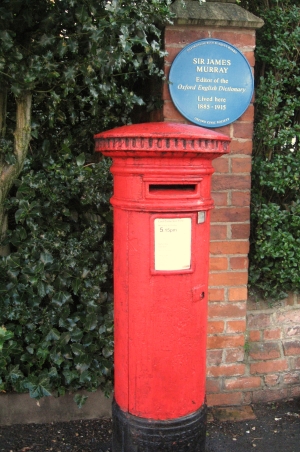
Although the government might have frightened its civilians with talk of chemical warfare, this, I believe, is what made people obey the government's new rule- that all citizens must wear the gas masks when they were outside. In frightening civilians about poison gas and distributing the masks unfairly, this created commotion because the people that did not receive the masks worried they would be in danger of being killed by poison in the air. Because the government did this, I believe it really cared about keeping its civilians and maintaining population. The fact that the government punished those that misplaced or broke their masks by making them pay for the masks only supports that argument as well as the fact that Air Raid Wardens (group created by government) conducted monthly inspections of gas masks. Post Office pillar boxes were given a new coating of paint that would detect gas. This made it easier for Gas Identification Squads, which were a group of chemists, to see if the gas in the air was poisonous. The fact that the British Government enforced that people wear this mask, show that they wanted to protect their people. I don't think that the British government should have inflicted greater punishment on the people not carrying their gas masks because if the people wanted to save their lives, they would have listened to the government because all it was trying to do was protect its people from somewhat avoidable death.
Subscribe to:
Posts (Atom)